
Description
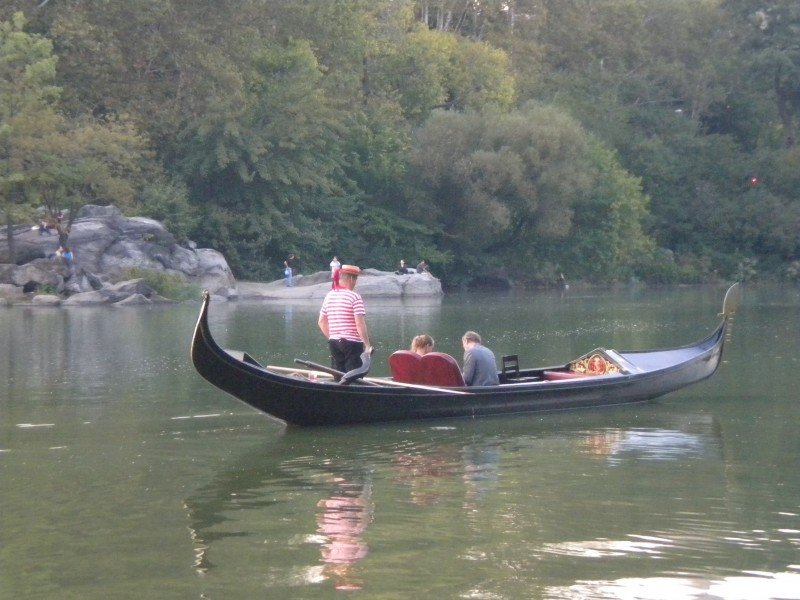
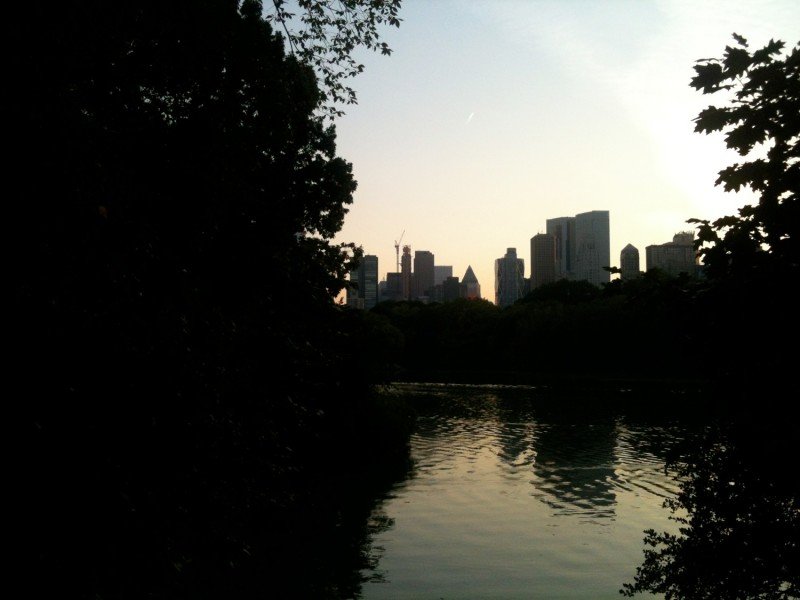
Central Park, New York City’s largest green space, offers spectacular views of the Manhattan skyline and makes you feel as if you’re standing in a huge garden—right in the middle of a metropolis. New York’s “green lung” is a full 4.7 kilometers long and features an incredible 93.5 kilometers of walking paths crisscrossing the park. Street performers, singers, dancers, cafes, and refreshment stands can be found all over the park. You can also rent one of the beautiful horse-drawn carriages, take a ride in a bicycle rickshaw, or rent bicycles or Vespas. You can even book a gondola ride on the park’s numerous man-made lakes.
Water as far as the eye can see
The Reservoir Lake, officially named the “Jacqueline Kennedy Onassis Reservoir,” is by far the largest in the park. Stretching from 85th Street to 96th Street, it was once New York City’s water supply facility. Surrounding it is a 2.5-kilometer running trail used daily by several hundred joggers, which has even inspired a number of presidents—and Jackie Kennedy herself—to go for a run. The Lake is the second-largest lake and is spanned by the beautiful Bow Bridge. Harlem Meer is also a special lake that offers all kinds of family activities. Here, children can play at one of the two water playgrounds and even go fishing. However, they are not allowed to keep the fish; they must be released back into the lake afterward. The other lakes are The Pond, Belvedere Lake, The Pool, and Conservatory Water.
Highlights of the Park
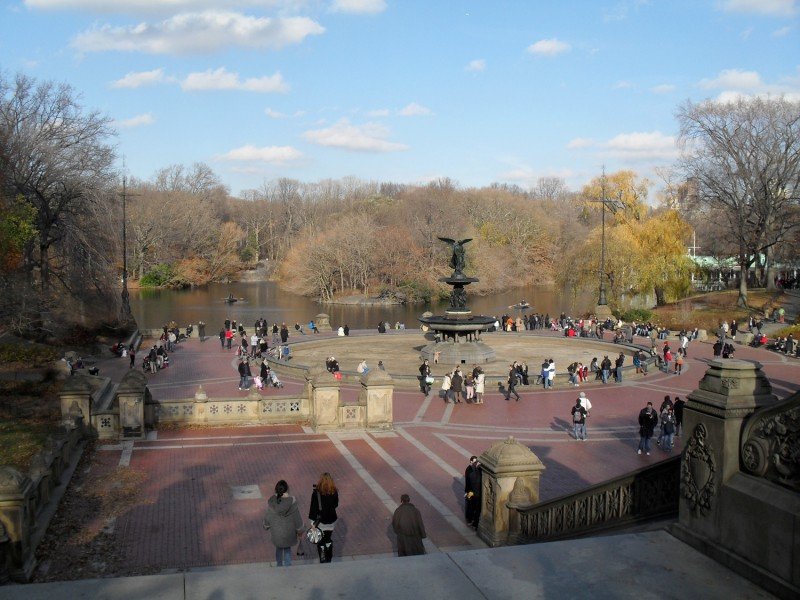
One of your first stops in the park should be Bethesda Terrace, located in the center of the park on 72nd Street. World-famous and the most photographed spot in Central Park, it welcomes film crews almost every week and serves as the setting for fashion shoots in the early morning hours. In the center of the plaza stands the Bethesda Fountain, crowned by the sculpture “Angel of the Waters.” The Carousel in Mid-Park on 64th Street is also world-famous and brings a sparkle to the eyes of more than just children.
Beautifully landscaped gardens in the heart of the park, such as the Conservatory Garden and the Shakespeare Garden, offer an oasis of calm amid the hustle and bustle of the city. The Wollmann Rink, open from November through March, is a great alternative to the crowded ice rink at Rockefeller Center.
The Strawberry Fields memorial, made of mosaic tiles, is dedicated to the peace activist and singer John Lennon, who was a big fan of Central Park in his day. Another monument you should check out is the Andrew H. Green Memorial Bench. In the 20th century, Andrew H. Green helped shape New York City into the place we know and love today. Did you know that you can even buy your own bench in Central Park? If you have at least $7,500 to spare, you can participate in the “Adopt a Bench” program and help support the preservation of Central Park.
Central Park Zoo
Animals from all over the world and every climate zone call the Central Park Zoo home. At Tisch’s Children’s Zoo, little ones can even pet pigs, sheep, and goats and see them up close. You can also watch penguin and sea lion feedings, and the Central Park Zoo even features a 4D movie theater.
Events and Concerts
Central Park is the most popular wedding venue in the city. If you’re lucky, you might just catch the bride and bridesmaids in colorful dresses posing for wedding photos. The most popular spots are the Conservatory Garden, the Ladies’ Pavilion, and The Pond.
An annual highlight is the New York City Marathon, which winds through the entire city but finishes in Central Park. The New York Shakespeare Festival is one of the most popular theater festivals in the world.
Countless fitness classes—often free—such as yoga or Pilates, are held on the lawns in Central Park. Even the youngest visitors aren’t left out; there are “Sandbox Programs” at almost every playground in the park. Here, children’s books are read aloud and stories are told, accompanied by music and dance that invite kids to join in.
The biggest music festival of the year takes place at Rumsey Playfield. SummerStage and the “Good Morning America” concert series feature artists from all genres. From May through September, you can get a taste of the world of rock, pop, reggae, salsa, country, and opera here.
Historical Information
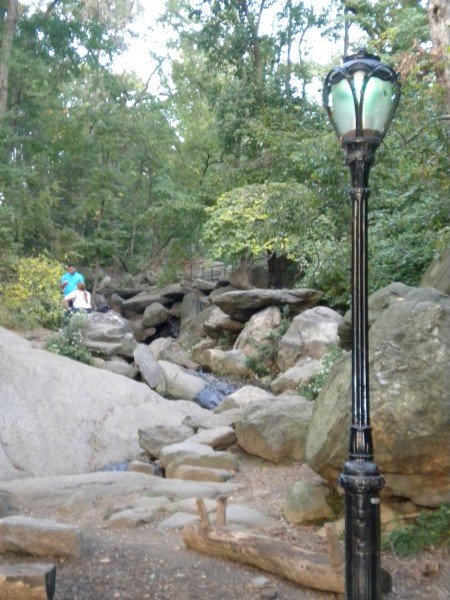
Modeled after city parks in major European cities such as London and Paris, construction work on Central Park began in 1858. After years of debate over the location, an agreement was reached. First, however, a total of 1,600 German and Irish immigrants—and eventually immigrants of African descent as well—were evicted from their properties to make way for the park.
The park was designed according to Frederick Law Olmsted’s “Greensward Plan,” with Calvert Vaux serving as the chief architect. Trees and shrubs were cleared, water was drained from the marshy area, and redirected into artificially created lakes. Subsequently, 4 million new shrubs, plants, and trees were planted. In addition, paths were laid out to facilitate access for horse-drawn carriages and pedestrians. The entire process took a full ten years, yet changes to Central Park continue to be made to this day.
Interesting facts
- Central Park is among the 5 best rated Tourist Attractions in the USA.
How to get there
By public transportation:
There are several entrances along 5th Avenue, from 110th Street to 59th Street.
The best way to get to Central Park is by subway: you can take lines 1, 2, 3, N, R, W, B, C, A, C, and D.
Buses can also take you there:
Take the Q32 bus and get off at the East 59th Street and Madison Avenue stop.
The M5L bus, which you can take to the Central Park South stop, also takes you directly to the park.
By car:
There are paid parking garages on almost every side street, such as at the Time Warner Center, the Met Tower, and Carnegie House.