Description
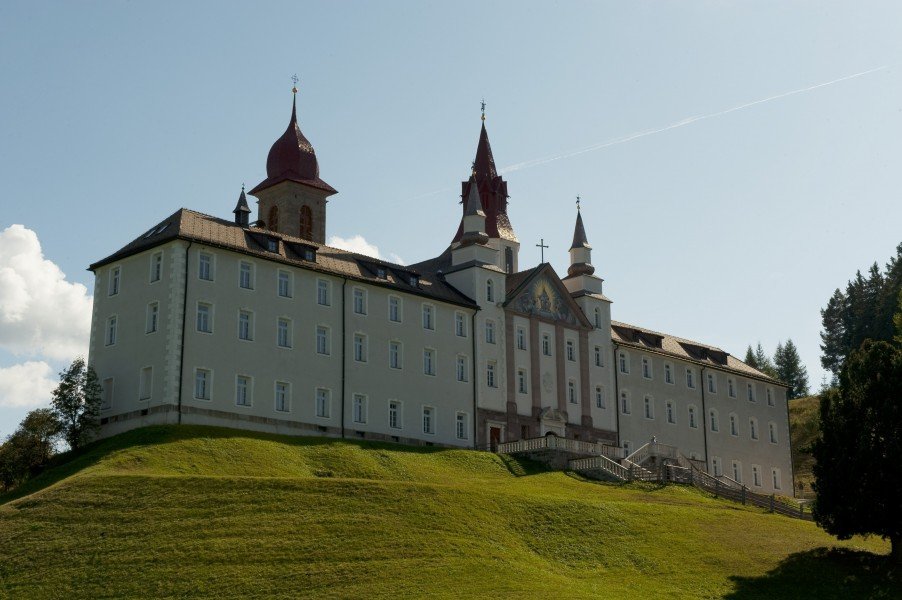
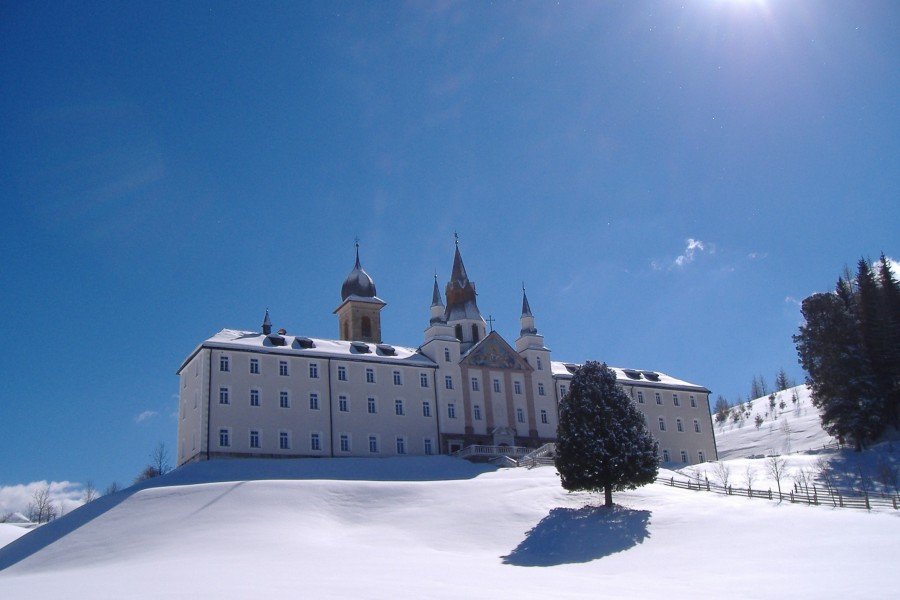
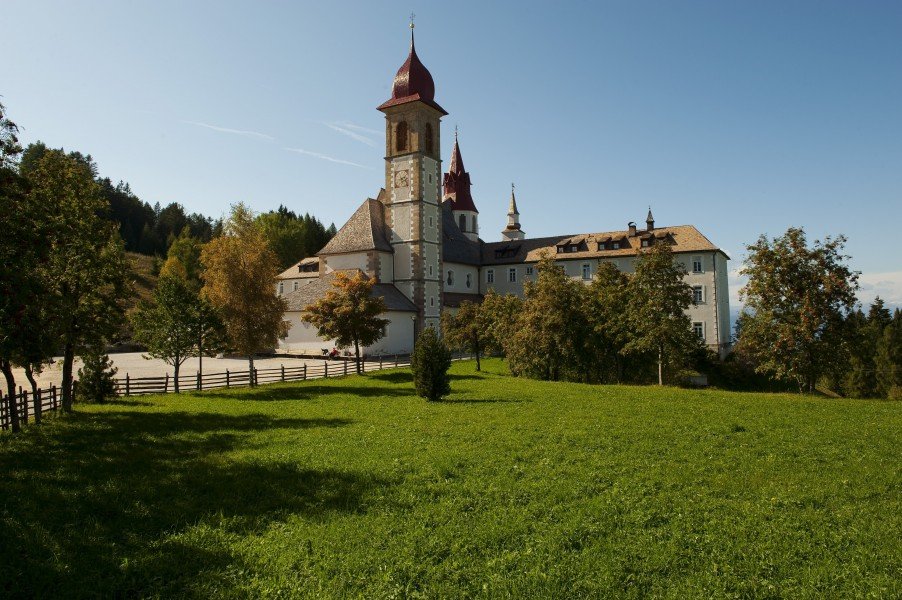
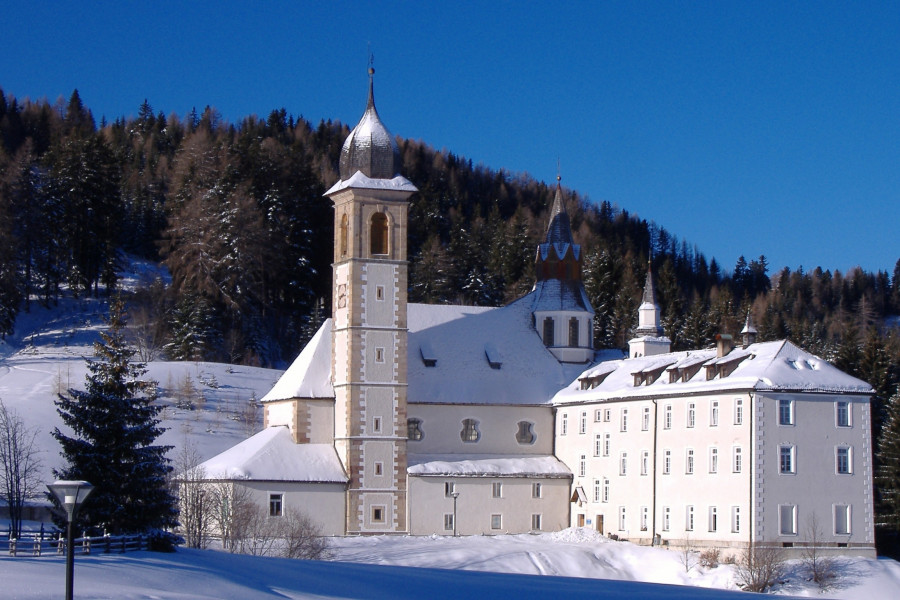
The Maria Weißenstein pilgrimage site in Petersberg is best known for its exceptionally beautiful interior design. Inside the church, you’ll find the miraculous image of Our Lady of Sorrows holding her dead son in her lap, a chapel of origin built by Leonhard Weißenstein, and a high altar covered in gold and silver leaf. The beautiful frescoes on the vaulted ceiling are by Adam Mölk, the side altars by Pußjäger, and other works inside the church by A. Silber and F. Haider.
You enter the church via a side staircase lined with hundreds of votive plaques. Next to it is the Chapel of St. Peregrine Laziosi, the patron saint of cancer patients.
Historical Information

The Church’s Origins and Renovation
The origins of Maria Weißenstein date back to 1553. At that time, the Virgin Mary appeared to Leonhard Weißenstein to heal him of an illness. In gratitude, he was to build her a chapel where the faithful could seek her help. This original chapel subsequently became a destination for numerous pilgrims, which is why a proper church was built in 1673. From 1719 to 1722, the church was renovated by the Innsbruck architect Johann Martin Gump and his colleague Agostino Maria Abfalterer. In 1753, Giuseppe Dellai gave the church a more pronounced Baroque style.
Dissolution of the Monastery and Reconstruction
Following a decree by Emperor Joseph II, the Weißenstein Monastery was dissolved. As part of this process, the three towers were demolished and the entire inventory was auctioned off. Reconstruction began around 1800. The present-day Baroque basilica was completed in 1654. It is integrated into the facade of the monastery, which is now administered by the Fathers of the Servite Order. In July 1988, Pope John Paul II visited the Weißenstein Monastery. His predecessor, John Paul I, also once spent his summer vacation here.
The miraculous image of Our Lady of Sorrows was re-crowned on August 24, 1885, during a ceremony attended by over 130 priests and approximately 15,000 faithful, by Giovanni Giacomo della Bona, then Bishop of Trent.
How to get there
Take highway's exit “Bolzano Nord/Eggental”, turn right direction Bolzano/Bozen, after about 0,5 km on roundabout keep left and head towards Val d’Ega (SS 241). Keep driving up to Ponte Nova. At Ponte Nova’s crossroads, turn to the right and continue to Nova Ponente and Pietralba/Maria Weißenstein (about 40 min. from highway toll booth).